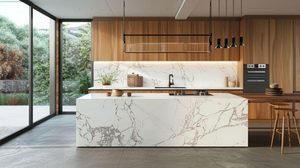
Porcelain Countertops: Benefits, Durability and Modern Kitchen Applications
Modern kitchen design is constantly evolving, with homeowners, architects and interior designers looking for surfaces that combine visual appeal with practical performance. Among the available options, porcelain countertops have become an attractive choice for contemporary residential and commercial interiors.
Known for their sophisticated appearance, low water absorption and wide range of designs, porcelain surfaces offer an alternative to traditional materials such as granite, marble and engineered quartz.
From marble-inspired finishes to minimalist concrete-look designs, porcelain countertops can complement a variety of architectural styles.
But are porcelain countertops durable? How do they compare with natural stone? And what should buyers consider before choosing a porcelain slab?
This comprehensive guide explores the benefits of porcelain countertops, durability, available designs, applications, maintenance requirements and key purchasing considerations.
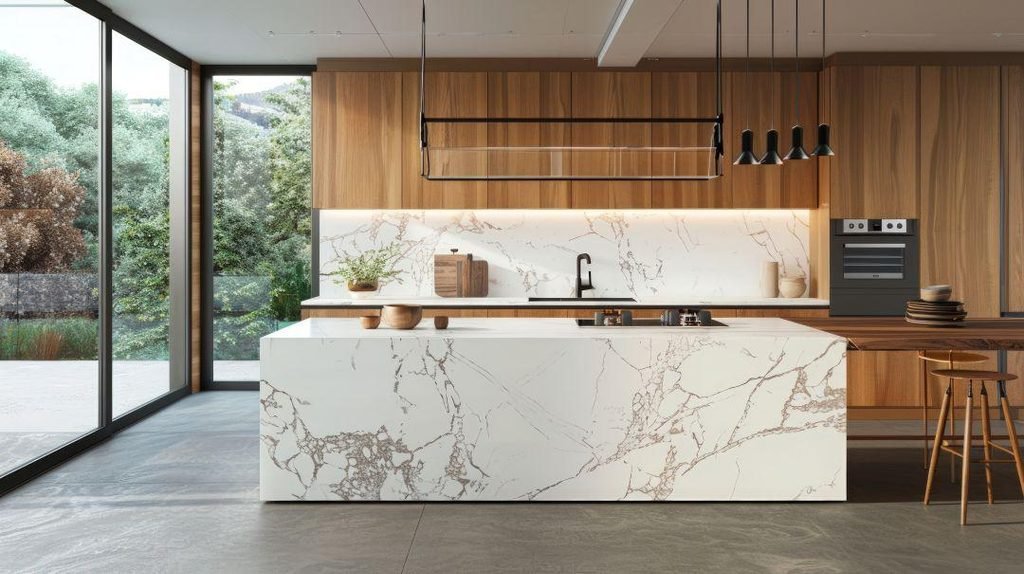
Insert Image 1 – Modern kitchen featuring a large-format porcelain countertop.
What Are Porcelain Countertops?
Porcelain countertops are work surfaces fabricated from dense ceramic slabs produced using carefully selected mineral-based raw materials.
During manufacturing, the materials are compacted and fired at high temperatures to create a hard, low-porosity surface.
Large-format porcelain slabs can be processed into countertops, kitchen islands, bathroom vanities and architectural surfaces.
Unlike natural granite or marble, porcelain can be manufactured in a wide range of controlled colours, patterns and finishes.
Popular designs include:
- White marble-look porcelain
- Black marble-look porcelain
- Natural stone-inspired surfaces
- Concrete-look porcelain
- Neutral beige and grey finishes
- Contemporary textured designs
These options allow designers to achieve different visual styles while benefiting from porcelain’s technical properties.
Explore the Vishwas Export product collection to discover porcelain slab and tile designs.
7 Benefits of Porcelain Countertops
Porcelain countertops offer several practical advantages for modern interior projects.
1. Excellent durability
Porcelain is manufactured to create a hard, dense surface capable of handling many everyday activities.
When appropriately specified, fabricated and installed, porcelain countertops can provide long-lasting performance in residential and commercial environments.
However, porcelain is not unbreakable. Edges, corners and unsupported areas can be vulnerable to chipping or cracking, especially during handling and installation.
2. Low water absorption
One of porcelain’s key characteristics is its low water absorption.
This makes suitable porcelain slabs highly resistant to moisture penetration and many common household stains.
Unlike some natural stones, porcelain generally does not require periodic penetrating sealers.
However, joints, installation materials and adjacent surfaces may have different maintenance requirements.
3. Good heat resistance
Porcelain is fired at high temperatures during manufacturing, which contributes to its heat-resistant properties.
This makes appropriately specified porcelain suitable for use in kitchen environments.
Nevertheless, hot cookware should be placed on trivets or heat-resistant pads to minimise the risk of thermal shock or damage to surrounding materials.
4. Wide variety of designs
Porcelain surfaces are available in a broad range of patterns and colours.
They can reproduce the appearance of marble, natural stone, concrete and other architectural materials.
This gives interior designers greater flexibility when coordinating countertops with flooring, cabinetry and wall surfaces.
5. Low maintenance
Porcelain countertops are generally easy to clean.
For everyday maintenance, a soft cloth, water and a manufacturer-approved cleaning product are usually sufficient.
Their low porosity helps reduce the absorption of many common liquids.
6. Suitable for large-format designs
Large-format porcelain slabs can be used to create expansive countertop surfaces and kitchen islands.
Depending on the slab dimensions and project layout, they may reduce the number of visible joints.
This is particularly attractive in contemporary kitchens where designers prefer clean lines and uninterrupted surfaces.
7. Versatile architectural applications
Porcelain can be used for more than kitchen countertops.
Depending on product specifications, it can also be suitable for vanity tops, furniture surfaces, wall cladding and other decorative applications.
Its design versatility makes it useful for coordinating surfaces across an interior project.
Popular Types of Porcelain Countertops
Porcelain countertops can be selected in different colours, surface patterns and finishes.
Choosing the right design depends on the overall architectural concept.
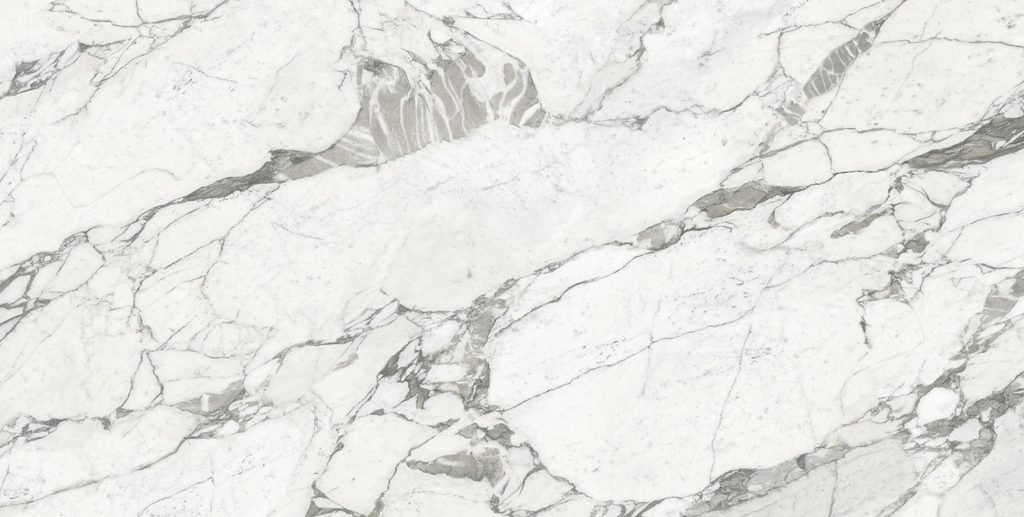
Insert Image 2 – Close-up of marble-look porcelain surface.
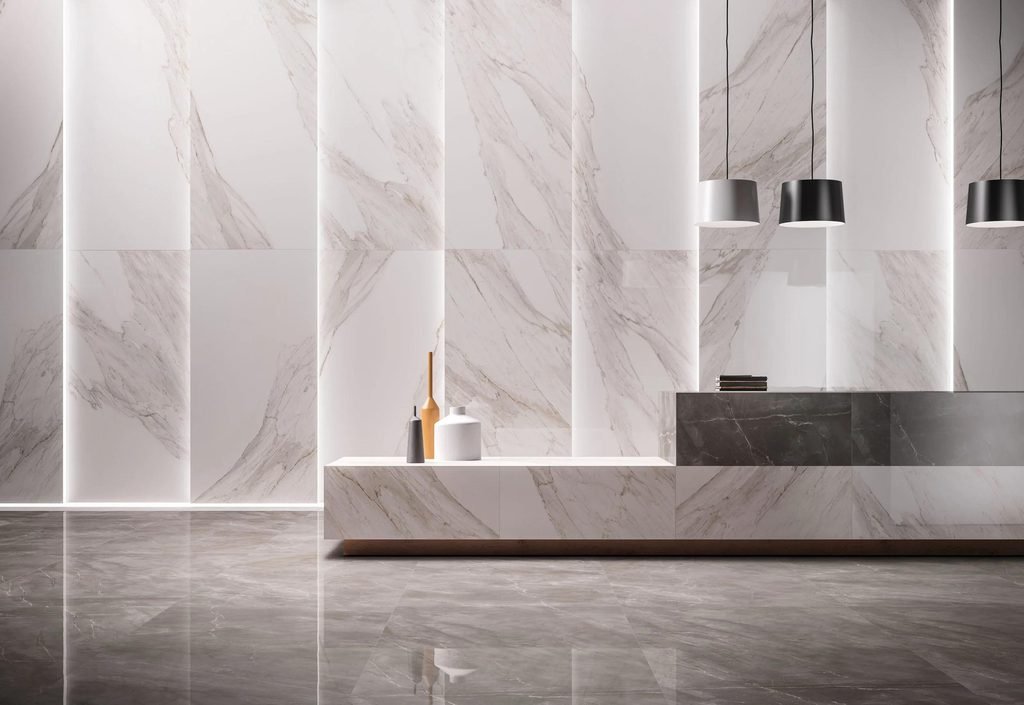
Marble-look porcelain countertops
Marble-look porcelain offers the visual character of natural marble with a manufactured surface.
White backgrounds with grey or gold-inspired veining are popular choices for premium kitchen interiors.
The patterns can provide a luxurious appearance without some of the acid-etching concerns associated with natural marble.
Concrete-look porcelain countertops
Concrete-look porcelain is often selected for contemporary, industrial and minimalist interior designs.
Grey and neutral tones complement wood, metal and matte cabinetry.
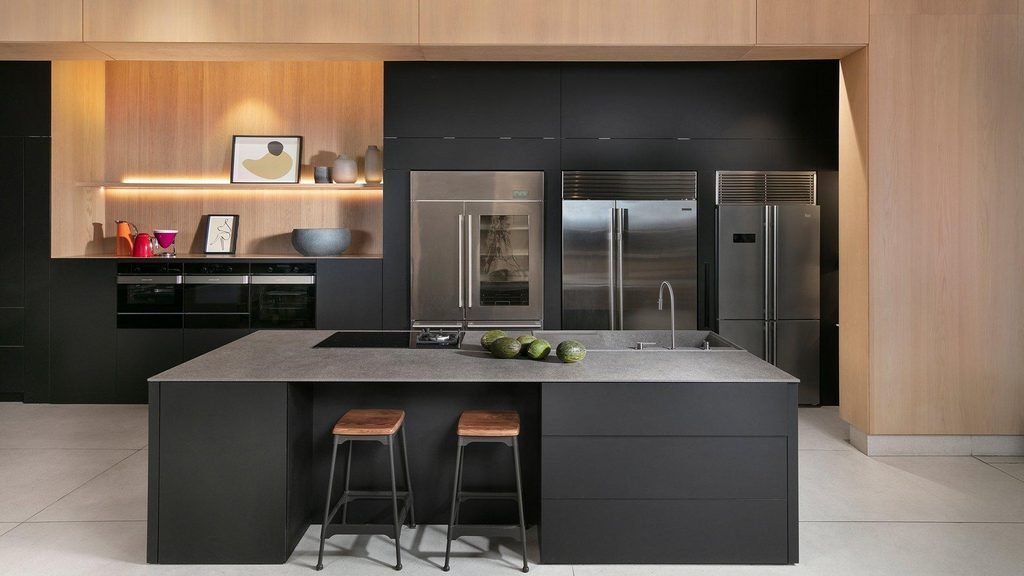
Black porcelain countertops
Black porcelain creates a dramatic appearance.
It can be paired with light cabinetry for contrast or with dark finishes to develop a cohesive modern aesthetic.
Some designs feature marble-inspired veins, while others offer more uniform surfaces.
Natural stone-look porcelain
Stone-look porcelain is designed to reproduce the appearance of different natural materials.
Depending on the product, the surface may feature subtle mineral patterns, textured effects or warmer earthy tones.
Matte and polished porcelain
Polished finishes create a reflective appearance that enhances patterns and colours.
Matte finishes produce a softer, understated aesthetic.
Surface characteristics, wear performance and cleaning requirements may differ, so buyers should review the specifications of individual products.
Porcelain Countertop Durability: What Should You Know?
Durability is one of the most important considerations when selecting kitchen worktops.
Porcelain performs well in many countertop applications, but the final result depends on product quality, thickness, fabrication and installation.
Scratch resistance
Many porcelain slabs are highly resistant to scratching during normal use.
However, abrasion from certain materials may still affect the surface, and cutting directly on the countertop is not recommended.
Stain resistance
Porcelain’s low water absorption helps resist many common stains from coffee, oils and other household liquids.
Spills should still be cleaned promptly, especially where liquids contact joints or exposed installation materials.
Edge durability
Although the surface is hard, porcelain edges can be susceptible to impact damage.
Professional fabrication, appropriate edge detailing and careful handling are important.
Installation requirements
Porcelain slab countertops require suitable support and specialised handling.
Large slabs, sink cut-outs, overhangs and seams should be planned by experienced fabricators.
Correct installation is essential to achieving long-term performance.
Porcelain Countertops vs Granite Countertops
Porcelain and granite are both established countertop options, but they differ in composition, appearance and maintenance.
| Feature | Porcelain countertops | Granite countertops |
|---|---|---|
| Material | Manufactured ceramic surface | Natural stone |
| Appearance | Controlled designs and patterns | Natural mineral variations |
| Water absorption | Typically very low | Varies by granite type |
| Sealing | Generally not required | May be recommended |
| Heat resistance | Generally good, with precautions | Generally good, with precautions |
| Surface hardness | High | High |
| Edge damage | Can chip under impact | Can chip under impact |
| Installation | Requires appropriate specialised fabrication | Requires appropriate stone fabrication |
Which is better?
Choose porcelain when your priorities include controlled designs, low water absorption and a contemporary surface aesthetic.
Choose granite when you prefer unique natural stone patterns and the traditional appearance of quarried material.
Both can offer excellent performance when correctly specified and installed.
For more information about granite, see our related guide: Granite Countertops: Benefits, Types and How to Choose the Right Stone.
Applications of Porcelain Countertops in Modern Interiors
Porcelain is widely considered for residential and commercial surface applications.
1. Kitchen countertops
Porcelain’s durability, design versatility and low porosity make it suitable for many kitchen countertop projects.
It can complement both contemporary and traditional kitchen styles.
Insert Image 3 – Dark porcelain countertop in a modern kitchen.
2. Kitchen islands
Large-format porcelain slabs can be used to create visually striking kitchen islands.
Depending on slab dimensions and fabrication requirements, designers may create waterfall-style edges and coordinated vertical panels.
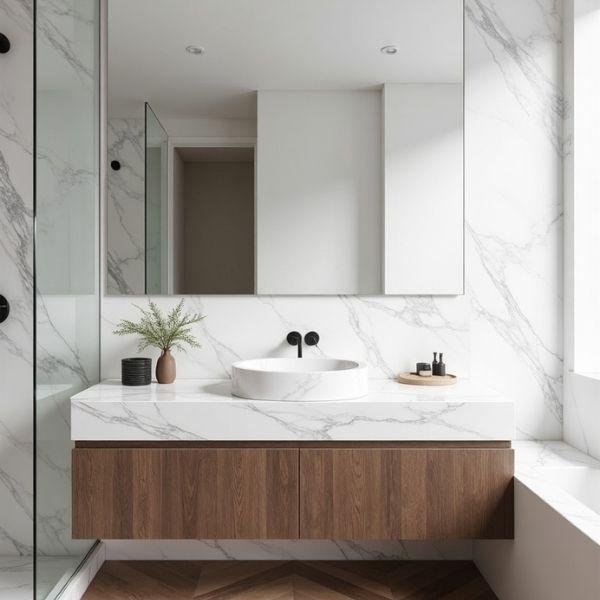
3. Bathroom vanity tops
Porcelain surfaces are suitable for many bathroom vanity applications because of their low water absorption and ease of cleaning.
They can be coordinated with wall and floor finishes to create a consistent design.
Insert Image 5 – Porcelain bathroom vanity.
4. Commercial reception counters
Porcelain can also be considered for office reception desks, hospitality counters and selected retail environments.
Designers should verify impact resistance, edge detailing and the requirements of the specific installation.
5. Decorative furniture
Porcelain slabs can be used for tables and other furniture surfaces where suitable structural support and fabrication methods are provided.
This extends the use of porcelain beyond traditional kitchen and bathroom applications.
How to Choose the Right Porcelain Slab
Selecting a porcelain slab for countertop fabrication requires careful consideration of dimensions, thickness, design and technical performance.
Insert Image 4 – Large-format porcelain slab selection.
Check slab dimensions
Large-format porcelain slabs are available in different dimensions.
For example, the Vishwas Export website lists tile and slab formats including:
- 600 × 1200 mm
- 800 × 1600 mm
- 1200 × 3000 mm
- 1600 × 3200 mm
These are website-listed formats, not confirmation that every format is suitable or available for countertop fabrication.
Buyers should confirm actual slab availability and use-specific requirements before ordering.
Select a suitable thickness
Porcelain slabs are manufactured in different thicknesses, but not all are suitable for countertops.
Thickness requirements depend on the product, span, reinforcement, fabrication method and manufacturer guidance.
Never choose a slab solely by appearance without checking its intended application.
Consider the surface finish
Polished and matte porcelain surfaces can create different visual effects.
Consider the overall kitchen design, lighting conditions and expected usage before selecting the finish.
Examine slab quality
Look for consistency in thickness, surface appearance, edge quality and other relevant product characteristics.
For bulk orders, confirm the applicable quality standards and acceptance criteria.
Choose the right supplier
Architects, fabricators and international buyers should verify product documentation, available sizes, packaging requirements and supply arrangements.
Visit Vishwas Export’s About Us page to learn more about the company.
How to Maintain Porcelain Countertops
Although porcelain is generally low maintenance, appropriate care helps preserve its appearance.
Clean regularly: Use warm water and a soft cloth with a suitable cleaning product.
Remove spills promptly: Wipe away coffee, oil, sauces and other substances before they dry.
Avoid unnecessary impact: Protect countertop edges and corners from heavy objects.
Use cutting boards: Avoid direct cutting on the surface.
Use trivets: Place hot cookware on protective pads.
Follow product guidance: Use cleaning and maintenance recommendations provided for the selected porcelain surface.
These simple practices can help maintain the countertop’s appearance over time.
Porcelain Slabs for International Buyers and Distributors
For international buyers, selecting porcelain involves considerations beyond surface appearance.
Importers, wholesalers and distributors should evaluate the technical specifications, available dimensions, packaging and delivery requirements of each product.
Important considerations include:
- Available sizes and thicknesses
- Product application suitability
- Surface finishes and designs
- Consistency between batches
- Relevant technical test reports
- Packaging arrangements
- Container loading requirements
- Shipping documentation
For additional information about tile and slab logistics, refer to Vishwas Export’s Packaging Details.
The packaging figures on that page should be confirmed for the specific product and order.
Explore Porcelain Slabs with Vishwas Export
Vishwas Export, based in Morbi, Gujarat, features ceramic tiles, porcelain surfaces and natural stone designs.
Its product range includes different surface aesthetics and large-format tile options suitable for consideration across architectural projects.
For architects, distributors and international buyers, reviewing the available collection is an important first step.
Explore the Vishwas Export collection to discover available designs and sizes.
For product suitability, specifications and supply enquiries, contact Vishwas Export.
Frequently Asked Questions About Porcelain Countertops
Are porcelain countertops durable?
Yes. Suitable porcelain slabs are hard, dense and durable. However, proper fabrication and installation are important, and exposed edges may chip under heavy impact.
Are porcelain countertops heat-resistant?
Porcelain generally offers good heat resistance. Using trivets or protective pads is still recommended to reduce the risk of damage.
Do porcelain countertops stain easily?
Porcelain’s low water absorption makes it resistant to many common stains. Prompt cleaning and proper maintenance are still advisable.
Are porcelain countertops better than granite?
Neither material is universally better. Porcelain offers controlled designs and generally low water absorption, while granite offers natural stone patterns. The best choice depends on the application and design requirements.
Do porcelain countertops need sealing?
Most porcelain countertop surfaces do not require penetrating sealers. However, joints and installation materials may have separate maintenance requirements.
Can porcelain slabs be used for kitchen islands?
Yes, appropriately specified large-format porcelain slabs can be fabricated into kitchen islands. Structural support and professional installation are essential.
Are porcelain countertops expensive?
Costs vary depending on the slab design, thickness, dimensions, brand, fabrication complexity and installation requirements. Buyers should compare complete project costs rather than slab prices alone.
Conclusion
Porcelain countertops combine contemporary design flexibility with durability, low water absorption and relatively straightforward maintenance.
Their availability in marble-look, stone-look, matte and polished designs makes them an attractive option for a variety of kitchen and interior applications.
However, choosing the right porcelain countertop requires more than selecting an appealing pattern. Buyers should consider slab thickness, technical specifications, fabrication requirements and installation quality.
For international importers, architects and distributors, working with an appropriate surface supplier is an essential part of the selection process.
Explore Premium Surface Designs at Vishwas Export
Discover porcelain tile and slab designs for your next architectural or interior project.