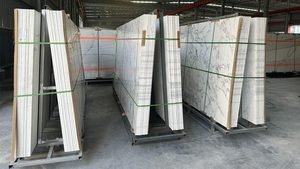
GVT vs PGVT Tiles: What’s the Difference and Which Should You Choose?
Choosing the right tiles involves more than selecting an attractive colour or pattern. Surface finish, durability, maintenance, and suitability for the application all affect how well a tile performs in a particular space.
Among the popular options in modern architecture are GVT and PGVT tiles. Both belong to the glazed vitrified tile category and offer a wide range of designs for residential and commercial interiors.
However, buyers often confuse these two terms or assume that PGVT tiles are automatically better than GVT tiles.
The main difference is the surface treatment, not necessarily the quality of the tile.
In this guide, we’ll explain the difference between GVT and PGVT tiles, their benefits, applications, finishes, and important buying considerations.
Insert Image 1 – Comparison of matte and polished vitrified tiles.
What Are GVT Tiles?
GVT stands for Glazed Vitrified Tiles.
These tiles are manufactured using a dense vitrified ceramic body and a decorative glazed surface.
Modern digital printing technology allows manufacturers to create different designs, including marble-inspired patterns, natural stone textures, concrete effects and other decorative appearances.
GVT tiles are available in various finishes, such as matte, satin, textured and certain glossy surfaces.
Their versatility makes them a popular option for contemporary architectural projects.
Key features of GVT tiles
- Wide variety of colours and surface designs
- Available in different finishes
- Dense vitrified tile body
- Low water absorption when manufactured to applicable porcelain specifications
- Suitable for selected residential and commercial applications
- Available in several dimensions
Actual performance depends on the individual product’s technical specifications.
Where are GVT tiles used?
Depending on the tile’s finish and technical characteristics, GVT tiles may be suitable for:
- Living room floors
- Bedroom floors
- Kitchen floors
- Bathroom walls
- Decorative feature walls
- Commercial interiors
For floor installations, slip resistance and wear performance should always be verified.
Explore the Vishwas Export product collection to discover available surface designs.
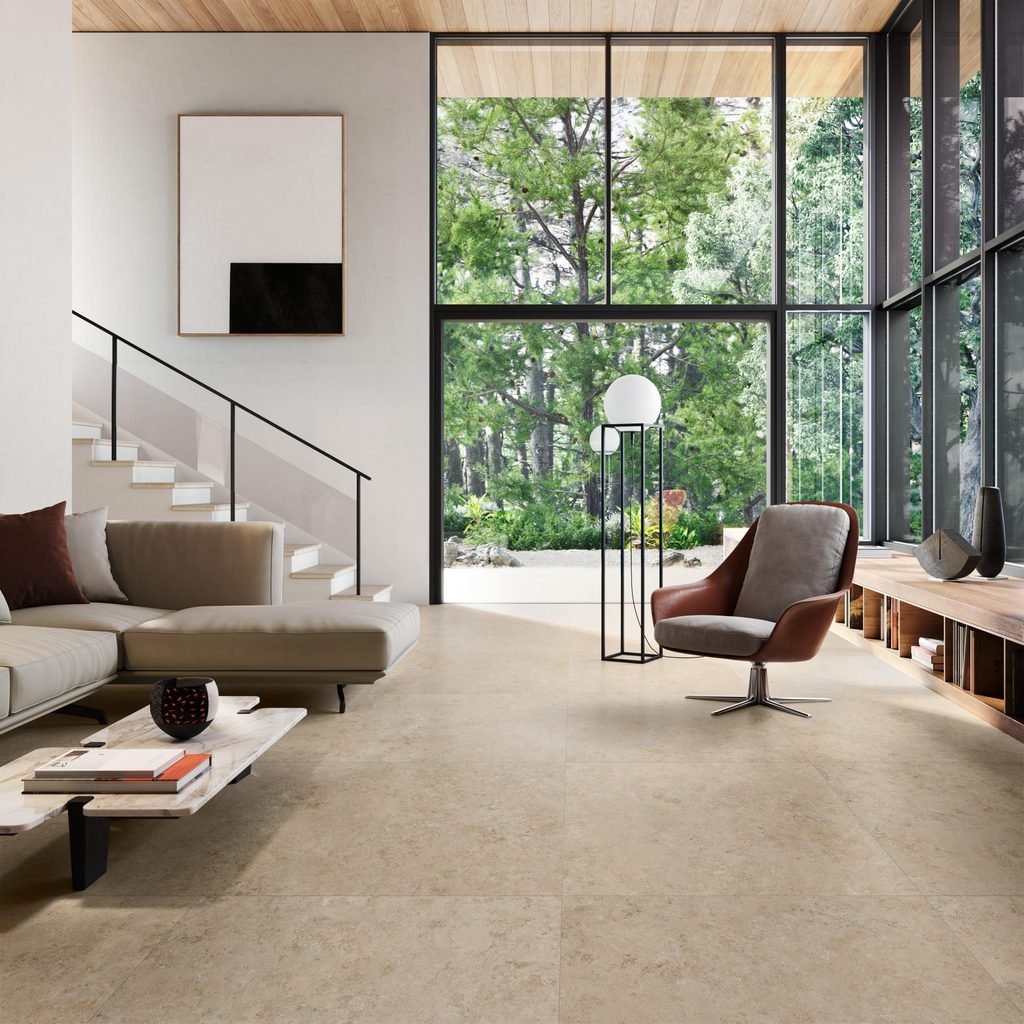
Insert Image 2 – Matte GVT tiles in a contemporary interior.
What Are PGVT Tiles?
PGVT stands for Polished Glazed Vitrified Tiles.
PGVT tiles are a type of glazed vitrified tile that undergoes an additional surface-polishing process.
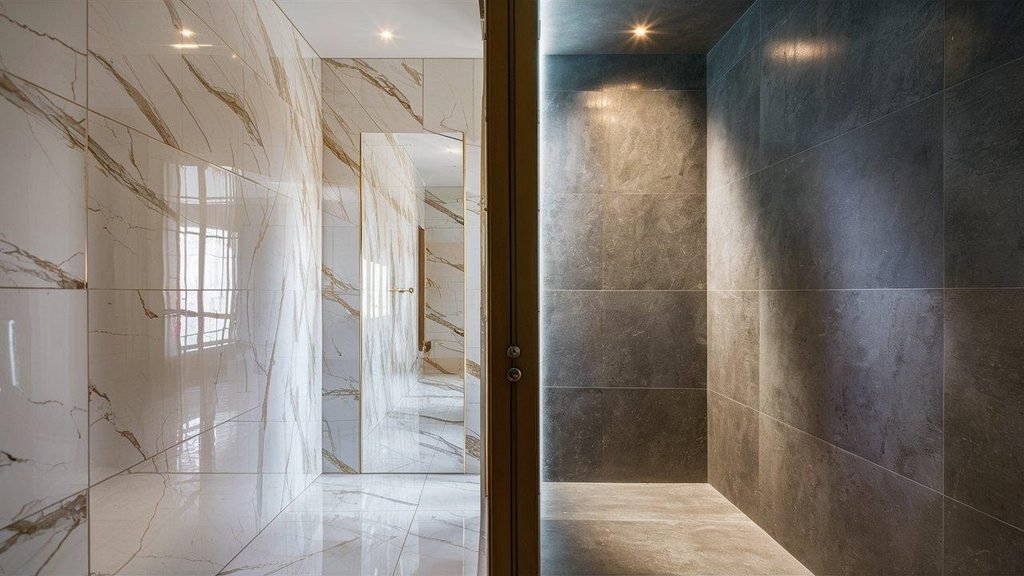
This polishing creates a high-gloss, reflective appearance.
Because of this finish, PGVT tiles are often considered for interiors where a bright, polished and sophisticated appearance is desired.
Their decorative surface can feature marble-look, stone-look and other printed patterns.
Key features of PGVT tiles
- Polished, reflective surface
- Wide range of decorative designs
- Dense vitrified tile body
- Attractive appearance in well-lit interiors
- Available in different tile sizes
- Suitable for selected wall and floor applications when specified appropriately
The polished surface does not automatically mean the tile is stronger or more durable than other GVT products.
Where are PGVT tiles used?
Depending on product suitability, PGVT tiles may be considered for:
- Residential living rooms
- Decorative walls
- Dry interior spaces
- Selected showrooms
- Reception areas
- Other interior applications requiring a polished aesthetic
Polished surfaces can present a greater slipping risk, particularly when wet. Suitability for flooring must therefore be confirmed through product-specific slip-resistance information.
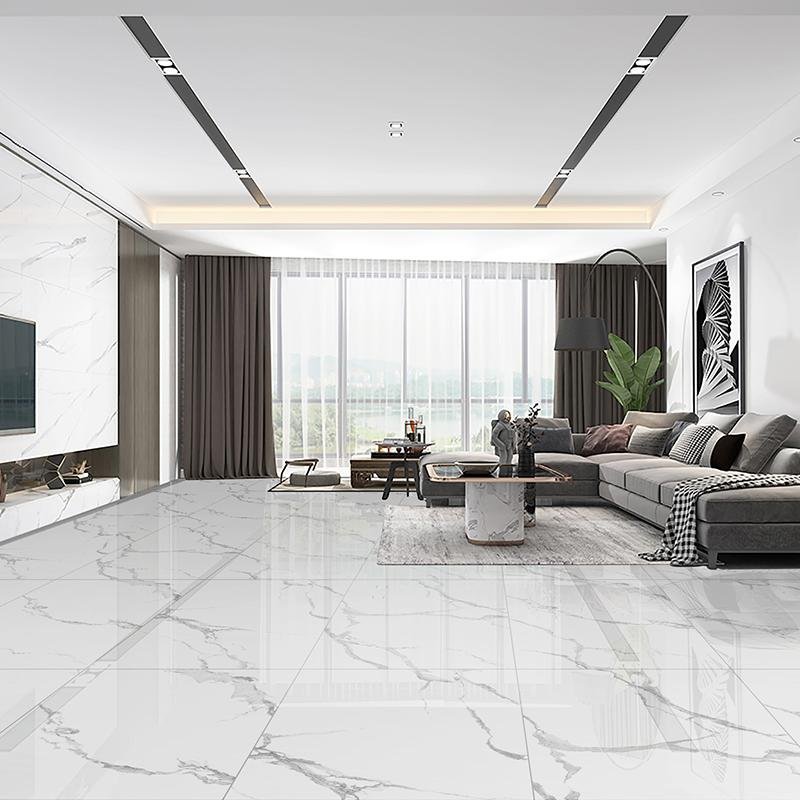
Insert Image 3 – Polished PGVT tiles in a modern living room.
GVT vs PGVT Tiles: Key Differences
Although GVT and PGVT tiles have similar underlying construction, their surface appearance and practical considerations differ.
| Feature | GVT Tiles | PGVT Tiles |
|---|---|---|
| Full form | Glazed Vitrified Tiles | Polished Glazed Vitrified Tiles |
| Surface finish | Matte, satin, textured or other glazed finishes | Polished, high-gloss finish |
| Appearance | Can be subtle or textured | Reflective and glossy |
| Design variety | Wide range of digitally printed designs | Wide range of digitally printed designs |
| Water absorption | Depends on product specification | Depends on product specification |
| Durability | Depends on glaze and technical properties | Depends on glaze and technical properties |
| Maintenance | Depends on surface texture | May show watermarks and smudges more visibly |
| Flooring suitability | Subject to slip and wear requirements | Subject to slip and wear requirements, especially when wet |
| Selection priority | Finish, design and performance | Gloss, design and performance |
The biggest distinction is that PGVT refers specifically to a polished glazed surface, while GVT is a broader category.
Neither category should be treated as universally superior.
5 Benefits of GVT Tiles
1. Versatile surface finishes
GVT tiles are available in different finishes, allowing designers to choose between subtle, textured and other decorative effects.
This makes them suitable for a variety of interior design styles.
2. Wide range of patterns
Digital printing technology enables designs inspired by marble, natural stone, concrete and other materials.
3. Contemporary appearance
Matte and satin GVT surfaces are popular in modern interiors where a less reflective appearance is preferred.
4. Multiple architectural applications
With the correct specifications, GVT products can be considered for residential flooring, wall cladding and selected commercial interiors.
5. Design flexibility
Different formats and finishes allow architects to coordinate surface designs across rooms and decorative areas.
5 Benefits of PGVT Tiles
1. High-gloss appearance
The polished surface is the most distinctive feature of PGVT tiles.
It creates a reflective finish that suits interiors designed around glossy surfaces.
2. Enhanced light reflection
PGVT tiles reflect surrounding light and can make an interior appear brighter.
The result depends on room size, lighting and tile colour.
3. Decorative marble-look designs
Polished glazed surfaces are frequently used for marble-inspired patterns and other decorative designs.
4. Suitable for statement interiors
PGVT tiles can complement decorative walls and selected interior floors where the product’s performance is appropriate.
5. Smooth surface appearance
The polished surface creates a smooth, refined visual effect, although routine cleaning is needed to remove marks and maintain its appearance.
GVT vs PGVT: Which Tiles Are Better for Your Space?
The right choice depends on the intended application, appearance and technical requirements.
For living rooms
Both GVT and PGVT tiles may be suitable for living rooms.
Choose a matte or subtle GVT finish for a contemporary, understated look.
Consider PGVT when a polished appearance is preferred, provided the product meets floor-use requirements.
For bedrooms
GVT tiles with soft colours and matte finishes can complement relaxed interior designs.
PGVT may also be considered where a glossy aesthetic is desired and the surface is appropriate for the application.
For kitchens
Kitchen floors can become wet or greasy.
The most important factor is selecting a product with suitable slip resistance and wear performance.
A matte appearance alone does not guarantee slip resistance.
For bathrooms
Bathrooms require careful consideration of moisture exposure and slip resistance.
For bathroom floors, choose a tile specifically rated for the intended wet-area application rather than relying on the GVT or PGVT label.
For commercial spaces
Commercial projects may involve heavier foot traffic, frequent cleaning and additional safety requirements.
Both tile types should be evaluated against the project’s performance specifications before selection.
Popular Sizes of GVT and PGVT Tiles
GVT and PGVT products are available in different formats depending on the manufacturer and collection.
Vishwas Export’s published porcelain tile and slab packaging information includes formats such as:
| Size | Potential application |
|---|---|
| 600 × 600 MM | Residential flooring |
| 600 × 1200 MM | Modern floors and feature walls |
| 800 × 800 MM | Spacious interior floors |
| 800 × 1600 MM | Large-format architectural surfaces |
| 1200 × 1200 MM | Large-area interiors |
| 1200 × 1800 MM | Decorative walls and selected floors |
These examples are based on listed glazed porcelain formats. They do not mean both GVT and PGVT finishes are available in every size.
For slab formats and shipping information, visit Vishwas Export’s Packaging Details page.
How to Choose the Right Vitrified Tiles
Before selecting GVT or PGVT tiles, consider the following factors.
1. Identify the application
Determine whether the tiles are intended for walls, floors or decorative surfaces.
Application suitability should be the first consideration.
2. Compare surface finishes
Examine actual tile samples under lighting conditions similar to the proposed installation.
A polished tile may look very different from a matte tile with the same printed design.
3. Confirm technical specifications
Request relevant product documentation covering:
- Tile dimensions and thickness
- Water absorption
- Breaking strength
- Surface abrasion resistance
- Slip resistance where applicable
- Manufacturing tolerances
- Recommended applications
4. Consider maintenance requirements
Highly polished surfaces may display fingerprints, watermarks and smudges more readily.
Textured surfaces can require different cleaning methods.
Select a finish that meets both aesthetic and maintenance expectations.
5. Check installation requirements
Large-format vitrified tiles require suitable substrate preparation, adhesives and installation methods.
Experienced installers should follow the product manufacturer’s recommendations.
What Should International Buyers Know About GVT and PGVT Tiles?
For international importers, wholesalers and distributors, selecting the right vitrified tiles involves more than comparing designs.
Product specifications, order consistency, packing information and documentation all influence the purchasing process.
Before confirming an order, buyers should check:
Product classification: Confirm whether the selected product is GVT, PGVT or another vitrified tile category.
Available finishes: Verify the exact finish rather than assuming that a tile description indicates its technical performance.
Sizes and thicknesses: Request an approved product specification sheet.
Product samples: Review genuine samples or actual product photographs before bulk ordering.
Packaging: Confirm packing quantities, pallet arrangements and container loading details.
Quality requirements: Establish agreed inspection criteria and applicable technical standards.
A clear understanding of these details reduces the risk of misunderstandings and supports more confident purchasing decisions.
Trust with Transparency: Making Informed Tile Decisions
At Vishwas Export, the campaign Trust with Transparency reflects the importance of clear information and reliable communication.
For international buyers, transparency begins with understanding what they are purchasing.
Knowing the difference between GVT and PGVT tiles helps buyers evaluate products based on their actual specifications rather than appearance or marketing terminology alone.
Clear communication about sizes, finishes, applications and packing arrangements supports better sourcing decisions.
Explore the Vishwas Export collections to review available surface designs, or learn more about Vishwas Export.
Frequently Asked Questions
1. What is the difference between GVT and PGVT tiles?
GVT stands for Glazed Vitrified Tiles, while PGVT stands for Polished Glazed Vitrified Tiles. PGVT tiles undergo an additional polishing process that creates a glossy surface.
2. Are PGVT tiles better than GVT tiles?
Not necessarily. Both belong to the glazed vitrified tile family. The better choice depends on surface finish, technical specifications and intended application.
3. Are GVT tiles suitable for flooring?
Yes, certain GVT tiles are suitable for flooring. However, slip resistance, abrasion resistance and other technical properties must match the installation requirements.
4. Can PGVT tiles be used in bathrooms?
Polished surfaces may become slippery when wet. Bathroom-floor suitability should be established through product-specific performance data. Do not select PGVT for wet-area floors based on appearance alone.
5. Are GVT and PGVT tiles available in 600 × 1200 MM?
600 × 1200 MM is a common glazed porcelain tile format. Availability of specific GVT and PGVT designs should be confirmed with the supplier.
6. How do importers select the right vitrified tiles?
Importers should compare product specifications, samples, available sizes, surface finishes, quality documentation, packaging and shipment requirements before placing orders.
Conclusion
Understanding the difference between GVT and PGVT tiles makes it easier to choose the right surface for different architectural applications.
GVT offers a wide variety of finishes and design possibilities, while PGVT is distinguished by its polished, reflective surface.
Neither option is automatically better than the other. Performance and application suitability depend on the technical characteristics of the selected product.
For architects, distributors and international buyers, the best approach is to compare actual specifications, review genuine product samples and communicate requirements clearly.
Explore Vitrified Tiles with Vishwas Export
Looking for glazed vitrified tiles, polished porcelain surfaces or other tile designs for your next project?
Explore Vishwas Export’s product portfolio and discuss your size, finish and sourcing requirements.